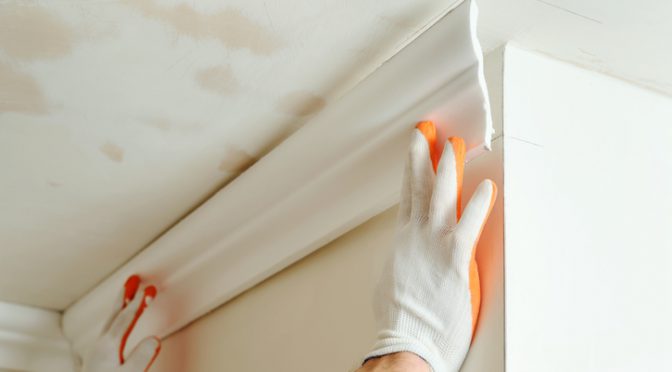
You’re on a tight budget and changing your home decor is not a possibility right now. Did you think about molding? It’s cheap, easy to install and it can transform the entire appearance of a room. Here are a few tips.

  • There is a variety of decorative moldings out there, not to mention various types of wood. Take the time to research: ask vendors, search the Internet or look through books at your local library.
  • To install baseboard molding, take the time to find all the studs behind the wall and mark them as you please. That’s where you’ll nail the baseboard and the moldings will fit snugly together.
  • Do you have to remove old molding? With a flat tool, pry the molding away from the wall by sliding the tool between the stud and the molding.
[caption id="attachment_14702" align="aligncenter" width="600"]iStock iStock[/caption]
  • Identify the areas where the floor is uneven before you install the moldings to avoid unpleasant surprises along the way.

[……]

Read more

AD

Review this checklist so the home you buy doesn’t break the bank.

Consider these 8 home-related expenses:

  1. Home inspection fee: Before closing, it’s customary for the buyer to hire a home inspector to confirm the home meets building standards and is “up to code” for that city. The inspection cost is based on the size and complexity of the home’s systems, but on average the fee should be between $375 and $500, according to our BMO Home Buyer’s Guide. You are responsible for paying this to the inspector. It’s a good idea to make your offer conditional, based on a successful home inspection. Sure, the house might look beautiful, but your inspector may detect structural or other problems that you can then negotiate with the seller to either fix or deduct the repair cost from the agreed-upon price.
  1. Appraisal fee: Your mortgage lender will require an appraisal (for example, the current market value of the home) before they’ll finalize your loan. Appraisals generally cost between $250 and $500, according to the Canadian Mortgage and Housing Corporation (CMHC), and you may have the option to roll it into your closing costs.
[caption id="attachment_14700" align="aligncenter" width="600"]iStock iStock[/caption]
  1. Utility bills: Unlike renters — who may have utilities built into their monthly rent payment — homeowners are responsible for all bills, such as water, gas, electric, home phone, cable and Internet. And this can add up faster than you may think. For example, keeping a home warm in the winter and cool in the summer can be pricey, depending on where you live. In fact, heating accounts for a significant part of the total expenses of Canadian households, according to Statistics Canada. Its Survey of Household Spending found Canadians spend an average of $1,895 on electricity, natural gas and other heating and cooking fuel a year. Need help planning? Use Natural Resources Canada’s home energy calculator to estimate how alternative energy sources and energy system replacements could potentially affect your energy bills.

[……]

Read more

Has the thought of buying a property with someone else or with a few people ever crossed your mind? It’s actually possible, but the experience requires discipline.

Buying a property collectively with a relative, either a friend or a family member, is often the ideal solution, especially since access to a property appears to be getting sparse these days. The constraints are numerous: a tightening of mortgage rules, a record high in household debts and difficulties in establishing a budget.

It’s a simple matter of mathematics. The more people are paying for a property, the lesser the amount each one has to pay for it. However, as any other joint enterprise, there are risks. Several things must be taken care of, such as contribution amounts, task distribution as well as the temperament of each and every one.

Hence, the importance of sticking to a protocol, not only to achieve the ultimate goal, which is buying a property, but also to prevent the relationships between the co-owners from going sour.

Erica Nielson, from the RBC Bank, offers advice to help you make your group purchase a success and not a source of problems.

Here is precisely her advice:[……]

Read more

You may wonder if sustainable houses designed, built, inhabited and then monitored step-by-step by professionals actually exist. The answer is yes. The EQuilibrium Housing Initiative is just that.

If you wish to learn and understand more about the sustainable housing industry – which is about to become fundamental in the fight against climate change – the Canada Mortgage and Housing Corporation’s (CMHC) initiative is for you.

The CMHC seeks to expand the construction of EQuilibrium houses across the country. Even if you’re planning to buy an existing home, exploring an EQuilibrium house will give you the required knowledge to properly evaluate another home that some owners might try to sell you as sustainable.

[caption id="attachment_14642" align="aligncenter" width="600"]iStock iStock[/caption]

The initiative exists since 2006. The EQuilibrium house is meant to serve as a model for sustainable living: safe and environmentally friendly materials, lower utility bills, renewable energies, conservation of our planet’s limited resources, reduced environmental impact, greater comfort and cost-effective construction. And, believe it or not, as an added value, sustainable houses are a better investment than traditional homes.[……]

Read more

If we compare the expense of an inspection to the cost of buying a home, it really isn’t that expensive after all! But too often, we still skip this step. 

“You would never purchase a used car without hiring a knowledgeable mechanic to inspect it first. So why wouldn’t you do the same thing before making one of the most important investments of our life?” asks Jean-Claude Fillion, an architect who specializes in pre-purchase inspections.

“It’s important to know where you stand before buying a home,” he continues.

Before you sign on the dotted line, here are five good reasons to get a home inspection before you buy a house.[……]

Read more

One of your windows is in poor condition. For whatever reason, you couldn’t replace it before the winter season’s arrival. Here are a few guidelines to help you prevent damage or a hike in heating costs.

  • Weatherstripping is the key element in heat loss prevention. Make sure it is in mint condition.
  • Clean every part of the window with a brush or a vacuum cleaner. It can actually make a small difference.
  • If the caulk breaks when touched with a screwdriver or any other tool for that matter, it needs to be replaced.
  • Window films can reduce heat loss up to 50%. It is applied to the inside of the window on the surface of the glass and can be installed by anyone.
  • Adhesive foam tape isn’t the most durable, but it will last through a winter season.
  • You can buy draft stoppers that attach to the outside of the window on milder days.

[……]

Read more

Take it or toss it? Six ways to decide what goes or stays before you move

Packing is a great opportunity to purge.

[caption id="attachment_14560" align="aligncenter" width="600"]iStock iStock[/caption]

Squeezing all your belongings into boxes may not be a fun way to spend your free time before you move. But, packing can provide the perfect chance to weed out any extra belongings, and start fresh.

Before you wrap up a single cereal bowl or framed photo, try the following tips to avoid moving a ton of unnecessary items into your new home.[……]

Read more