ADVICE FROM DESJARDINS

Relocating for work or school? If you are moving to start a new job, run a business or study full-time at a post-secondary level, you may be eligible to deduct some of your moving expenses from your income taxes.

Eligibility rules are the same for both the Canada Revenue Agency and Revenu Québec. If you want to deduct moving expenses, your new home must put you at least 40 km closer to your workplace or school.

Expenses you can deduct:

  • moving company fees
  • rental fees for a truck or trailer
  • storage costs for your household belongings
  • food and lodging expenses for you and your family during the trip to your new home
  • the cost of selling your old home or cancelling your lease
  • the cost of upkeep for your old home if it remains vacant for a time despite reasonable efforts to sell (maximum $5,000)

[……]
Read more

AD

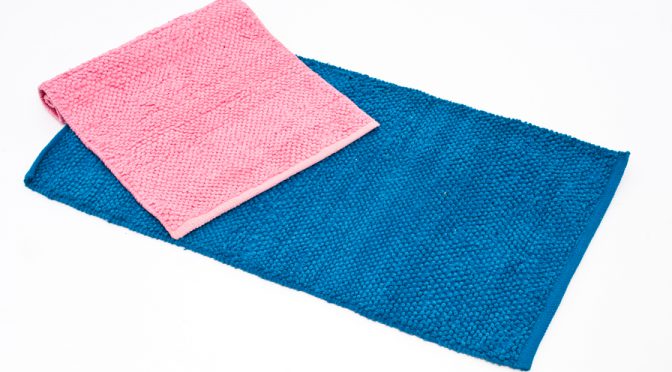
From the 60s to the 80s, everyone was rushing to install wall to wall carpeting. Decorative, warm, comfortable, sometimes soft, they had everything. Synthetic fibres proliferated on Quebec floors.

Faced with the accelerated degradation of the environment, ecologists pushed carpets out of our houses. There are many reasons. Carpets cause a great deal of pollution, from manufacturing to use. Carpets are not biodegradable, don’t last long, can barely be recycled, contain numerous toxic chemicals and are made of petroleum products.

Health professional have added their grain of salt with a concrete argument: carpets can be dangerous for your health. They attract everything that floats in the air: dust, chemical residues, mites, humidity and even outdoor waste that sticks to soles. They also contain volatile organic compounds (VOCs) and sometimes turn into germ nests. That was the end for carpets. We see less and less.

Hardliners have tried to group rugs with enemies of the environment, but in vain. Today, certain rugs are made entirely of recyclable materials.[……]

Read more

Installing a carpet is not complicated, whether it’s made of synthetic materials or natural fibres, but you have to be an excellent handyman to do it right. You also have to be patient and precise, have specific tools and get advice from a renovation centre professional. Here is some general advice:

-If you opt for natural fibres, remember that you have to allow the carpet to rest for at least two days in the ambient air of the room that it will be installed in, so that it becomes acclimatized. Remember, they are natural fibres and not synthetic materials.

-Seagrass is perfect for the bathroom because it grew in water. However, you want to avoid sisal as it doesn’t like excessive humidity, although it’s elegance makes it perfect for other rooms in the house.[……]

Read more

The beauty and richness of carpets and rugs is undeniable. They are a fountain of colours, styles, designs and textures. They can give a room its decorative momentum.

Carpets and rugs have been getting bad press for a few years (read the Green carpets and rugs article), which explains their decline, but that doesn’t affect their role as creator of ambiance. The sumptuous lofts of Chelsea in London or Manhattan in New York do not deprive themselves of carpets.

Walls with neutral colours allow carpets and rugs filled with flamboyant designs to become the centre of attraction, since these textiles have the ability to define the style of a bedroom, a living room or any kind of sitting room. For example, sparkling colours will blend with the warm woodwork of a room, creating a sumptuous decor.

On the contrary, a plain carpet or rug allows you to decorate a room any way you like. Sometimes designs and colours of a carpet or large rug are found elsewhere in the room: bed cover, curtains, a throw rug on a crate, creating an effect of continuity. If everything is rather plain, you get an atmosphere tinted with great intimacy.[……]

Read more

[caption id="attachment_13876" align="alignright" width="300"]iStock iStock[/caption]

You should let a professional do the laser cutting of a glass surface. However, an excellent handyperson can do it, as long as they’re careful.

Here is some general advice.

  • Wear protective gloves and glasses.
  • Laser cutting a glass surface requires a great deal of accuracy. The process must be done in a single cut, under steady pressure. It’s best to make a few dry runs before doing the final job.
  • Practice with the laser cutter so that you can handle it skillfully. The owner of the tool or merchant will tell you how to hold it properly. You could even look at a video on YouTube.
  • First you have to moisten the tools (glass cutter or shaping tool) with oil.
  • Place a cloth or other material between the table and the glass surface to cut.
  • Draw a straight line along a ruler using a felt pen, soak the traced line with oil and break the line with a slight tap of the finger or joint.
  • For a circular line, use a spinner with suction cups equipped with a shaping tool that acts as a compass. The technique requires a great deal of accuracy.
  • Once the line is broken, rub it with a silicon carbide abrasive moistened with oil along the line.
  • While we’re at it, if you have to drill a glass surface using an electric drill, place a material around the area to be drilled and make sure it’s firmly attached, as the bit tends to slip.

[……]

Read more

The future doesn’t just belong to ecomaterial. Glass is the shining example.

Initially, i.e. many centuries ago, glass was not very transparent or resistant. Scientific progress allowed glass to gain in transparency and strength. That is why the manufacturing of glass requires a great deal of energy because the transformation temperature is high. It emits CO2, heavy metals and polluting gases in industrial quantities.

Glass is far behind wood, stone, earth or straw in terms of ecological materials. However, it is far ahead of the pet peeves of ecologists: PVC, aluminium and even steel.[……]

Read more

What are the first things you should ask yourself before buying rental property?
First of all, will you live there or not? From a fiscal point of view, if you are renting out the entire property, you could deduct all of the day-to-day expenses related to the building from your income. But if you’re an owner-occupant, only expenses related to the rental units will be deductible. On the other hand, when you go to sell, the portion of the building occupied by the owner is exempt from capital gains tax. If it is completely rented out, all of your capital gains will be taxable.

In addition, when you have a specific property in mind, you need to consult the assessment roll to ensure that the number of units on the realtor’s listing is correct. If a livable basement is considered to be a dwelling by the city, this counts as one more unit. If this is the case, you might have to make a bigger downpayment.

Speaking of which, how much of a downpayment do you need for this type of purchase?
If you’re renting out all of the units, you need to make a minimum downpayment of 20% of the building’s purchase price.

If you’re going to be an owner-occupant, you could lower the downpayment to 5% of a duplex’s purchase price with mortgage loan insurance. For a triplex or quadruplex, you’ll need to put down a minimum of 10%.

The rules are the same for all Canadian financial institutions.[……]

Read more