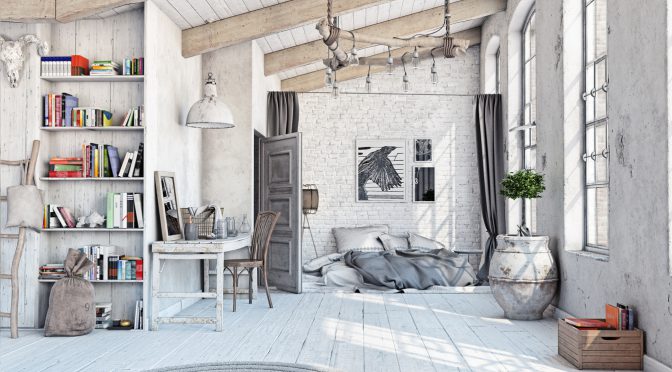
Perfection does not exist in a shabby chic decor and that’s exactly what makes it so charming. Distressed but vibrant furniture overshadows new furniture. It fits easily into this decor that is soft, joyful, organic, and let’s admit it, a little bohemian. Shabby chic is silky-soft. At the heart of this style is distressed furniture. As if the wood was worn out by sea salt, or simply over time. The furniture looks like the kind you would find at a flea market or antique store. You can see the wood through the cracked paint. In some instances, several coats of paint let different layers of colours peek through.

Shabby chic becomes a full-blown style when the walls, ceilings and floors also have a worn-out look, if not to say neglected. The whole room seems weathered. Almost everything looks distressed but without the dusty and old appearance of antiques or the tacky and playful side of pure vintage.

[caption id="attachment_16768" align="aligncenter" width="600"]iStock iStock[/caption]

Shabby chic can be mellow and not so mellow. The first variant gets all of its potential from a stark and sober decor, almost bare, where the furniture takes centre stage to express the style. The second alternative welcomes various decorative accessories: candlesticks, crumpled fabrics, dried flowers, patchwork, glazed silver. In this instance, shabby chic meets vintage.[……]

Read more

AD

Once you’ve settled the question of open or closed term, you will inevitably have to decide between a fixed and variable rate. Which is best for your situation?

When the time comes to choose your mortgage term, there are a number of elements to take into account, including your financial means, your risk tolerance and the economic situation. To demystify it all and equip you to make the best possible decision, here’s some information that will help you make an informed choice about your mortgage type.

Fixed- versus variable-rate: which is lower?

As a general rule, variable-rate mortgages tend to be lower than fixed-rates. To understand the difference, you need to look at how these rates are calculated. Essentially, a financial institution’s variable interest rate corresponds to its preferential rate. This is established based on the Bank of Canada’s overnight rate. Add a certain percentage to this, and you have the variable rate.

As with fixed-rate mortgages, the monthly payment amount usually stays the same, but the ratio of interest to principal is subject to market fluctuations. There are also certain types of variable-rate mortgages where the monthly payment varies based on the fluctuation of market interest rates. With a fixed-rate mortgage on the other hand, you are guaranteed to always have the same amount dedicated to repaying your principal, regardless of what the market does.[……]

Read more

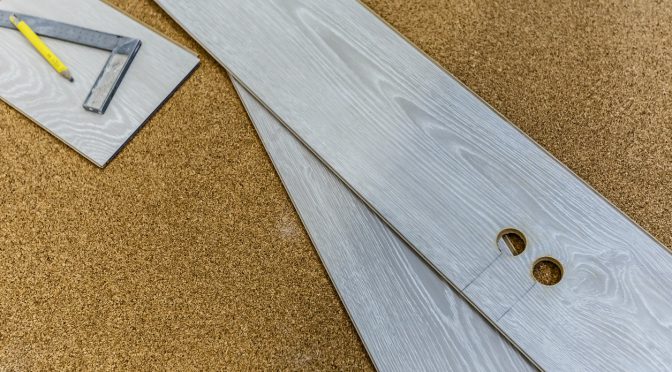
A floating parquet floor is still quite popular and gains in quality. Its most significant asset is that it suits almost any decor. Moreover, its installation is relatively straightforward. Here are the basic guidelines.

  • A few days before the installation, lay the planks in the specific room to allow them to get acclimated.
  • Make sure the solid base on which the floor will be installed has no trace of moisture.
  • There is no need to remove the existing floor (unless it is carpeting) to install the floating parquet floor as long as it is properly levelled so that the surface is clean and smooth.
  • You will need to install a membrane to stifle sounds and vibrations. It will also act as a thermal insulator. It can be made of polyethylene foam or cork.
  • When laying the planks, make sure to leave a gap of approximately 10 millimetres between the floor and wall to allow the wood to move freely when humidity and temperature variations force it to expand. Otherwise, the planks will curl.
  • Begin with the straightest and longest wall, uninterrupted by the door for example, and finish with the wall with the most cut-outs. Thus, the imperfections will show less.
  • All kinds of spacers, long ruler or string, can help you keep a consistent gap around the room’s perimeter. Baseboards or quarter-round moldings will hide the joint along the walls.

[……]

Read more

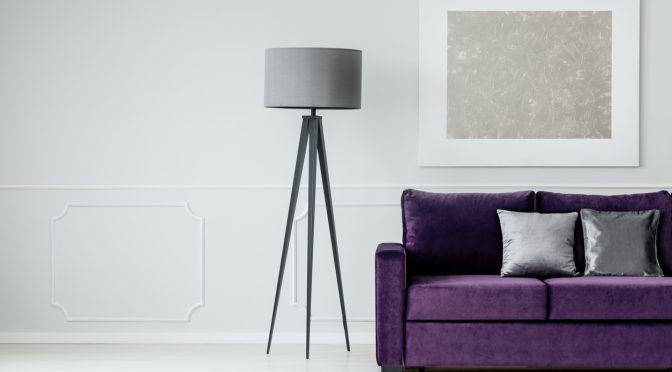
Absolutely majestic! Include a myriad of velvet accents and upholstered leather furniture to your bedroom or living room and you will achieve a captivating design, especially if you add a touch of satin to the decor. Classic elegance, you say? Better! A heavenly space.

[caption id="attachment_16657" align="aligncenter" width="600"]iStock iStock[/caption]

Velvet fabric and upholstered furniture, side by side, offers ultimate elegance. It’s timeless. Even after centuries, this style is still in vogue. A long time ago, in palaces and mansions, marble was also part of the decor, and that says it all. Elegance attracts elegance.[……]

Read more

A plant product that is sustainable, recyclable and rot-proof: cork is sought after as a floor covering and is considered one of the most efficient insulating material for walls, doors, roofs and floors. In addition, it looks beautiful and inviting. In short, it’s a God-given product.

Let’s start with the basics. Cork is often used as a subfloor for a hardwood or floating floor because of its sound and crush-resistant properties and its elasticity. A more discreet role, but an efficient one, nonetheless.

[caption id="attachment_16649" align="aligncenter" width="600"]iStock iStock[/caption]

Far from being unattractive, cork is most usually used above ground, in the form of slabs, as a flooring material. It has numerous qualities. It is flexible, effective against vibrations, soft to the touch, and pleasant to look at. A dozen shades, if not more, are available on the market.[……]

Read more

On January 1, 2018, the revised Guideline B-20 came into effect, governed by the Office of the Superintendent of Financial Institutions (OSFI). The changes to Guideline B-20 reinforce OSFI’s expectation that federally regulated mortgage lenders (FRML) remain vigilant in their mortgage underwriting practices. The full outline of the revised Guideline can be found on their website.

[caption id="attachment_16512" align="alignright" width="600"]iStock iStock[/caption]

How do these new changes affect you?

[……]

Read more

Most real estate brokers will tell you: overpricing your home from the moment you put it on sale is asking for trouble. You have so little to gain and so much to lose. Here are the reasons why.

A seller may be tempted to ask for an exaggerated price in case a buyer, too naive to realize it or too rich to afford wasting time, finishes by taking the bait. That is wishful thinking. The odds of that happening are slim. Very slim.

Perhaps the homeowner thinks, since there is no hurry, that he will patiently wait for his price, comfortably seated at home. A buyer will eventually come knocking. Wrong!

[caption id="attachment_16522" align="aligncenter" width="591"]iStock iStock[/caption]

Perhaps the seller overestimates the value of his property or demands an unreasonable price to compliment his homeowner’s pride. No matter the case, he will regret his decision.[……]

Read more