Start preparing a safety net for unexpected expenses.

Life happens.

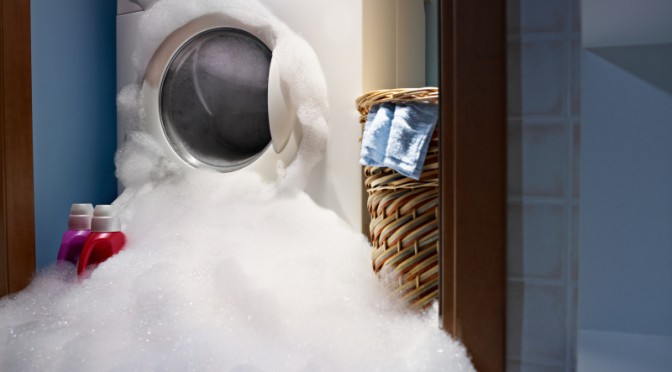
Your washing machine breaks. You have a leaky roof. You lose your job. Your child gets sick.

No matter how well you plan, you simply can’t predict if and when unexpected expenses are going to arise — and inevitably they will. Your pay cheque may only go so far towards covering costs, and you’ll want to avoid going into debt or dipping into your retirement or long-term savings.

So what can you do to prepare?

Start saving now.
Open a separate savings account for emergencies, and get into the habit of depositing a weekly or monthly amount, even if it’s just $10 or $15. That may mean one less meal out, but it will add up over time. A great way to get started is to set up automatic savings. Once you’re in the habit of automatically setting money aside each month and adjusting your spending habits, you can gradually increase the amount.[……]

Read more

AD

There is the library as a room in itself. There are bookshelves used as practical or prestigious furniture. And there are books which are more than a simply decorative accessory. Organized with taste, they can astonish visitors, regardless of the room.

[caption id="attachment_11887" align="aligncenter" width="580"]iStockphoto iStockphoto[/caption]

Books adapt to all styles, from the rural to the contemporary, not to forget lounge. They can also generate the desired decorative virtue: classical elegance, warmth and intimacy, whimsical, disorder and anarchy. The role of the book in decoration is underestimated.

Books fit with all materials: glass, wood, bamboo, vinyl, marble. Mobile, they can be placed anywhere or permanently: At the end of a table, on a couch, on a fireplace mantel, on a night table, near the bath and even on the floor if you stack them into a column.[……]

Read more

The closest one to us is the John P. Robarts Research Library, on the campus of the University of Toronto. It has been given a fitting nickname: the Fort Book.

[caption id="attachment_11882" align="alignright" width="580"]iStockphoto Toronto University John P. Robarts Research Library. Photo: iStockphoto[/caption]

The massive tower that rises in front of the main façade looks a lot like a pillar of defence. The use of concrete as the primary material enhances the effect of mass. The building has been used as a stand-in in movies for a prison, a zombie-infested space and a crossing point for extraterrestrials.

A caveat however: You will notice the numerous vertical lines that draw the eyes upward. Since the windows are also vertical, a Wikipedia article refers to the building as if it “transported the scholars anxious to escape the noise and turmoil of the vulgar press into a dream palace enshrining its holy mysteries.”

Continuing with the strange and mysterious, have you read Umberto Eco’s In the Name of the Rose? He wrote a good part of this classic detective story in this library. According to Wikipedia, he used the library as inspiration to describe the secret library in his novel.[……]

Read more

Glass bricks in a wall enhance the luminosity. Here is an example of the steps to follow (list of material at the end).

  1. Check for wires and pipes. Use an electrical wire detector. If not, drill a small hole, which is easy to fill.
  1. Is there a load bearing wall? If so, only use the space between the studs.

Measure the space to be freed up taking into account the space between the studs, the shape of the bricks, the surrounding frame and the mortar.

Space between the studs:

12’’ for old buildings

16’’ for the next generation

24’’ is becoming increasingly popular today

[caption id="attachment_11884" align="aligncenter" width="580"]iStockphoto iStockphoto[/caption]

Standard format of glass brick:

8x8x3, 8x8x4, 6x6x3, 6x8x3 or 4x8x3

Example of dimensions to consider to transform an interior wall

  • Available space: 16’’x16’’
  • Wall: 4’’ thick
  • Two rows of de two 6x6x3 bricks
  • Mortar: ¼’’ around the bricks
  • Frame: ¼’’ plywood

[……]

Read more

Are you a first-time buyer hoping to find your dream home? Stop and take a look at the common mistakes of first-time buyers so that you don’t get trapped.

Not thinking long term

Your family will grow and your needs will change. Clearly determine your needs by thinking long term. Moving is expensive, so ideally you should avoid moving too often.

Not budgeting for all home ownership costs

When you purchase your first home, you need a comprehensive budget that takes into account all the costs associated with this major transaction. You should make provisions for inspection and notary fees, moving expenses, home improvements (painting, decorating, accessories, etc.), furniture, equipment, transfer costs, municipal and school taxes, insurance, maintenance, etc.

[caption id="attachment_11746" align="aligncenter" width="580"]iStockphoto iStockphoto[/caption]

Getting caught up in looks

All too often, first-time buyers are swept away by the cosmetics of a property. Staging a home can definitely make it more appealing. It enhances the overall look and feel of the property and makes a fantastic first impression on visitors. However, don’t be distracted by furniture and décor. You need to objectively assess a property’s potential; otherwise you could miss out on a great opportunity.[……]

Read more

[caption id="attachment_11681" align="alignleft" width="320"]iStockphoto iStockphoto[/caption]

She is said to be the most read author in the world, all genres combined. Therefore, many of you must be among the admirers of the one who created detectives Hercule Poirot and Miss Marple. Did you know that Agatha Christie fed a strong passion for houses?

At one point in her life, she was at the head of eight residences. She bought dilapidated houses in London, renovated them and sold them furnished. Sometimes she would rent them or live in them with her second husband.

On more than one occasion she built homes in her head if she saw an ideal site during her many voyages.

As a child, she enjoyed “building houses with bath towels draped over chairs and tables to make houses that you come out of on all fours,” she wrote in her autobiography.

Little Agatha loved her dollhouse. She bought so much furniture that she wanted a second house. Her mother offered her a cupboard as an expansion room. Agatha placed the first house under the cupboard, which gave the residence six storeys. Once a week, the people living in the house had to move. Agatha loved moving.

She lived in an apartment with her first husband. She experienced the scourges of the housing shortage and overly high rents. She spent hours pouring over the classified ads in the newspapers.

She experienced living in the suburbs, then purchased her first home. She had to shop. A burden you say? Not at all, Searching for a house was one of her favourite hobbies.[……]

Read more

Today, it’s no longer necessary to choose hardwood as flooring to enjoy its great look. Other options have the same effect. One of them is engineered wood flooring.

This flooring is made of two superimposed parts; the base and the top coat.

Generally speaking the base contains a minimum of three layers of material, which may include plywood, fibreboard and wood. The higher the number of layers, the more the flooring remains intact. It is less susceptible to shrinking and expanding with changes in temperature and humidity.

[caption id="attachment_11685" align="aligncenter" width="580"]iStockphoto iStockphoto[/caption]

The top coat, called veneer, is natural wood. A multitude of species can be blended with the most varied decors. The floor looks exactly like a hardwood floor.

The veneer is usually 0.6 mm to 4.5 mm and sometimes even more. If the top coat is more than 3.5 mm thick, it can be sanded and varnished. It will easily stand up to long-term use.[……]

Read more